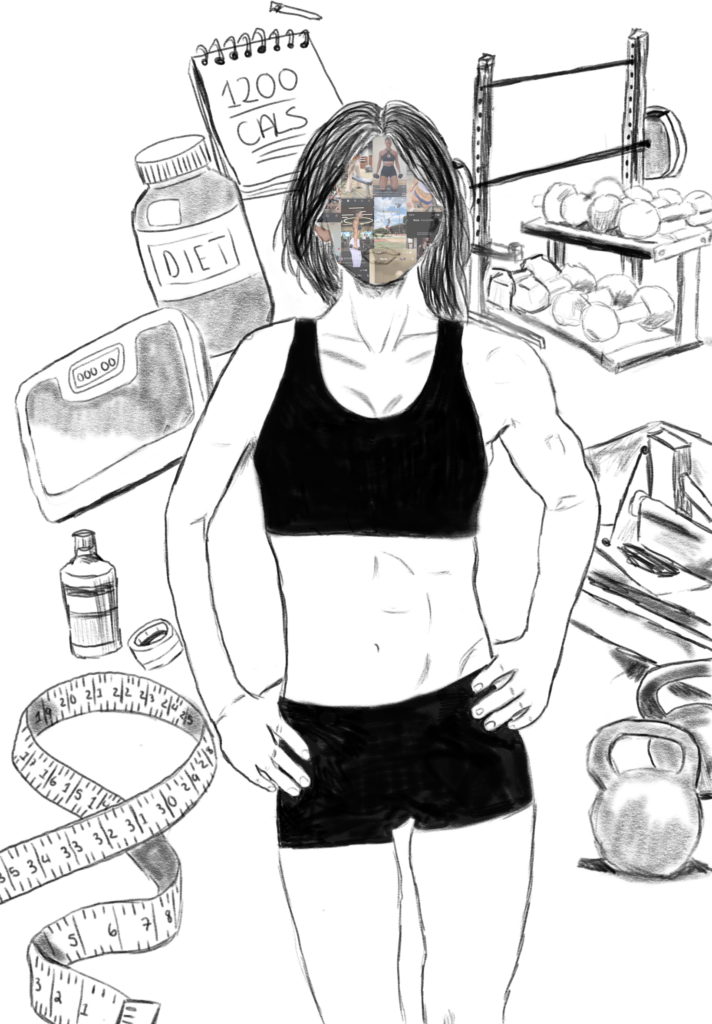
The ideal female athlete is incredibly strong, lifts heavy effortlessly, yet remains perfectly lean and toned to avoid looking “too masculine” (Camacho-Miñano and Gray 2021). Mainstream media representations shifted away from the extreme “skinny” ideal of the 2000s, but these new, allegedly healthier standards carry the same toxic weight. They simply promote exercising for appearance purposes under the guise of health (Rodgers et al. 2025).
Fitness influencers dominate social media feeds and present this curated strength as a matter of personal choice and empowerment. Instagram influencers post routines that promise a perfect body through constant work (Camacho-Miñano and Gray 2024).
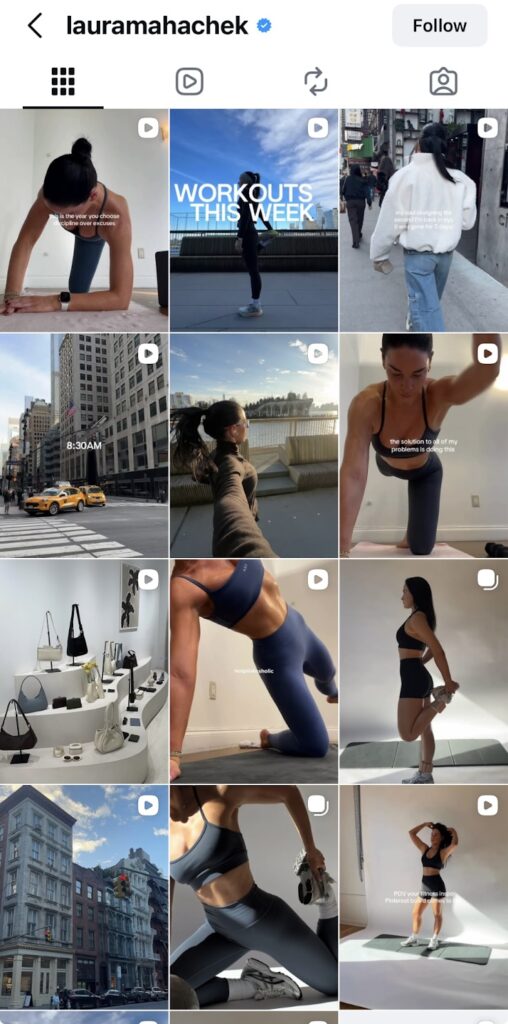
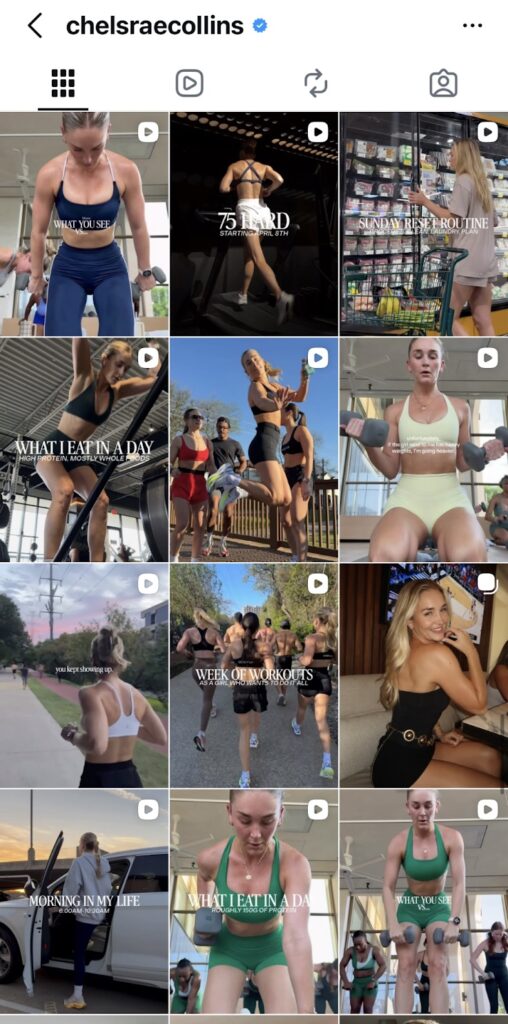
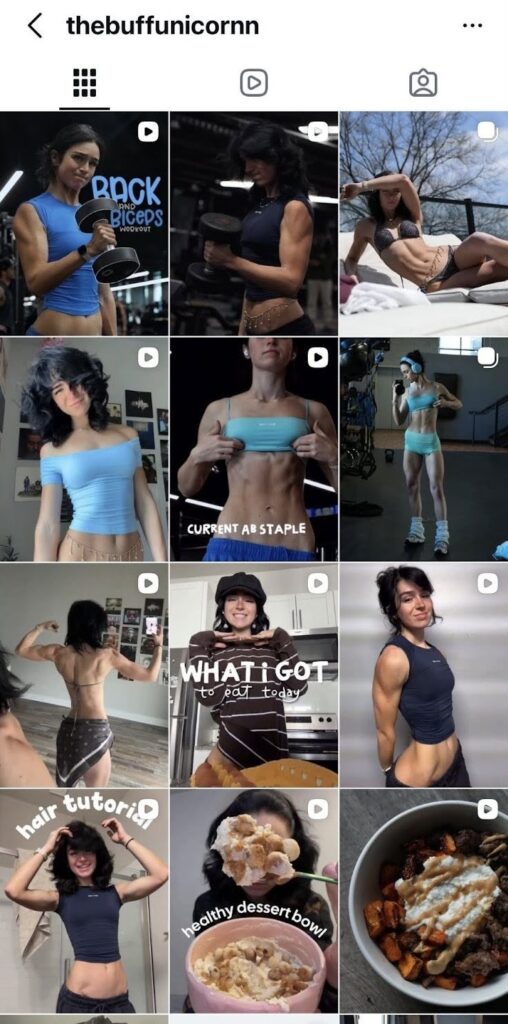
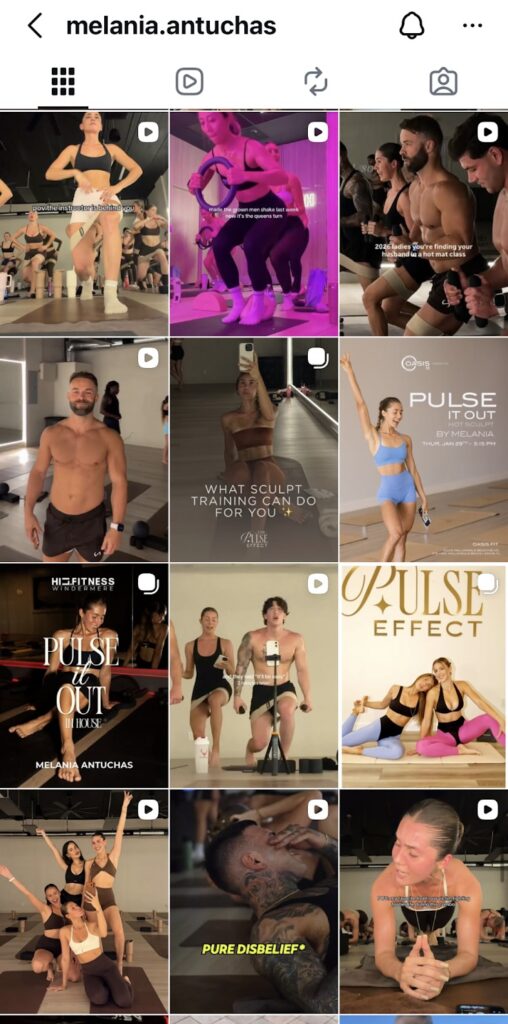
A look at typical influencer feeds shows a curated mix of weekly workout videos and meal plans, blended with personal photos from nights out that are specifically designed to showcase their strong, idealized bodies.
As a college athlete, I train hard and eat massive amounts of food to fuel my performance. Yet watching these videos social media influencers share triggers a sudden urge to restrict my diet just to achieve their specific look. I find myself desiring an aesthetic body that is physically impossible to sustain while actively competing. I am not alone in this, as young women around the world experience these exact same “ugly feelings” of guilt, frustration, and exhaustion when trying to balance real life with these impossible aesthetic standards (Kurghan and Thorpe 2025).
Selling the “Glow-up”
The average American 15-year-old spends an average of 29 hours per week online outside of school. While this statistic includes both boys and girls, data revealed a highly gendered pattern where girls are significantly more frequent social media users, with over half actively seeking health and fitness content (Camacho-Miñano et al. 2019). These digital platforms constitute a form of “biopedagogy,” teaching young women that continuous work on the body is a mandatory requirement for a successful and happy life. Sociologists call this the “glow-up imperative,” a cultural trap where the relentless pressure to be perfectly thin is simply rebranded as a personal responsibility to be “healthy” and “fit” (Kurghan and Thorpe 2025).
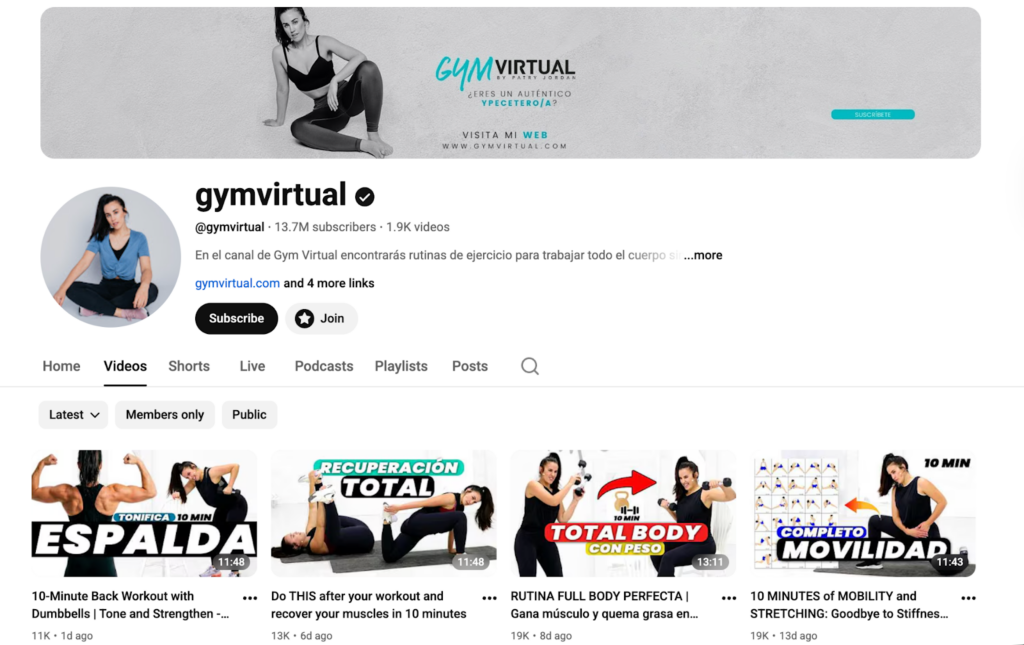
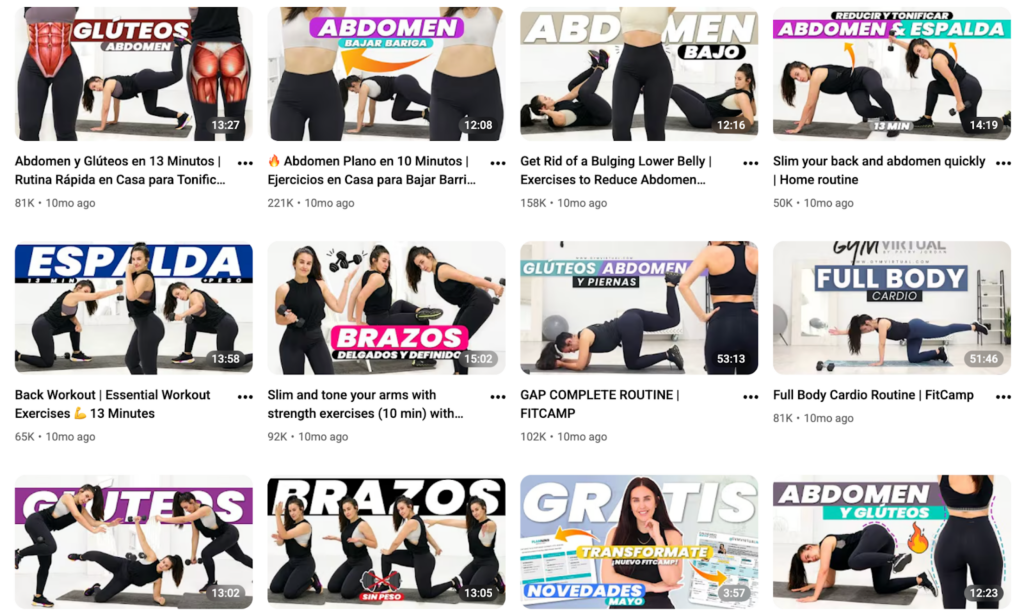
Spanish fitness mega-star, Patry Jordán, has 10 million YouTube subscribers and posts the same content; she is just one of thousands of influencers pushing identical routines (Camacho-Miñano and Gray 2021).
Influencers push this exhausting standard because it is highly profitable. Social media, in effect, actively incentivizes women to make themselves hypervisible to capitalize on their physical appearance (Rodgers et al. 2025). These influencers turn their bodies into digital commodities and monetize their followers’ trust to drive the relentless consumption of fitness and beauty products (Kurghan and Thorpe 2025).
Trapped by the Algorithm
Algorithms act as “algorithmic media” that push a highly specific, narrow version of health to the top of users’ feeds, teaching young women exactly which bodies hold social value. The “fit girl” aesthetic typically centers on thin, conventionally attractive White women with access to good gyms (Perloff 2014). This flattens the rich diversity of normal, healthy bodies across the country, leaving anyone who does not fit this mold feeling frustrated and excluded because the algorithm actively makes their bodies invisible (Kennedy 2020, as cited in Kurghan and Thorpe 2025).
The interactive nature of social media makes this cultural trap deeply personal. In the United States, 92% of teens go online daily, exposing a massive audience to these intense body standards. This self-surveillance is heavily gendered; data shows that 60% of early adolescent girls post pictures of themselves alone compared to about 36% of boys, making girls far more vulnerable to self-objectification. When young women take and post selfies, they use these images as a measuring stick to monitor their own flaws and constantly evaluate their bodies from an outsider’s critical perspective (Salomon and Brown 2019). They don’t just passively consume this curated fitness content; such comparisons increase their own body dissatisfaction and body surveillance (Rodgers et al. 2020).
The Offline Reality: An Epidemic of Exhaustion
The pressure to maintain this aesthetic does not stop when the screens turn off; it is actively supported by offline interactions. Real-world peers and male coaches frequently reinforce these toxic gender norms. Women athletes report that men in the gym express concern that lifting heavy will make them look “too bulky” or masculine, suggesting that it will ruin their chances of finding a partner (Knowlton and Newland 2024). This creates a contradictory demand where society expects women to be strong, but punishes them if they step outside the bounds of conventional attractiveness.
This trend sparks controversy today because it disguises restrictive dieting and obsessive exercise as health and wellness. It creates an impossible standard that leaves young women feeling guilty, tired, and ashamed (Kurghan and Thorpe 2025). The obsession with curated body transformation impacts young women worldwide. Thousands of miles away in Aotearoa, New Zealand, researchers note that this global trend breeds a state of “toxic productivity” that drains the joy out of life and training (Kurghan and Thorpe 2025).
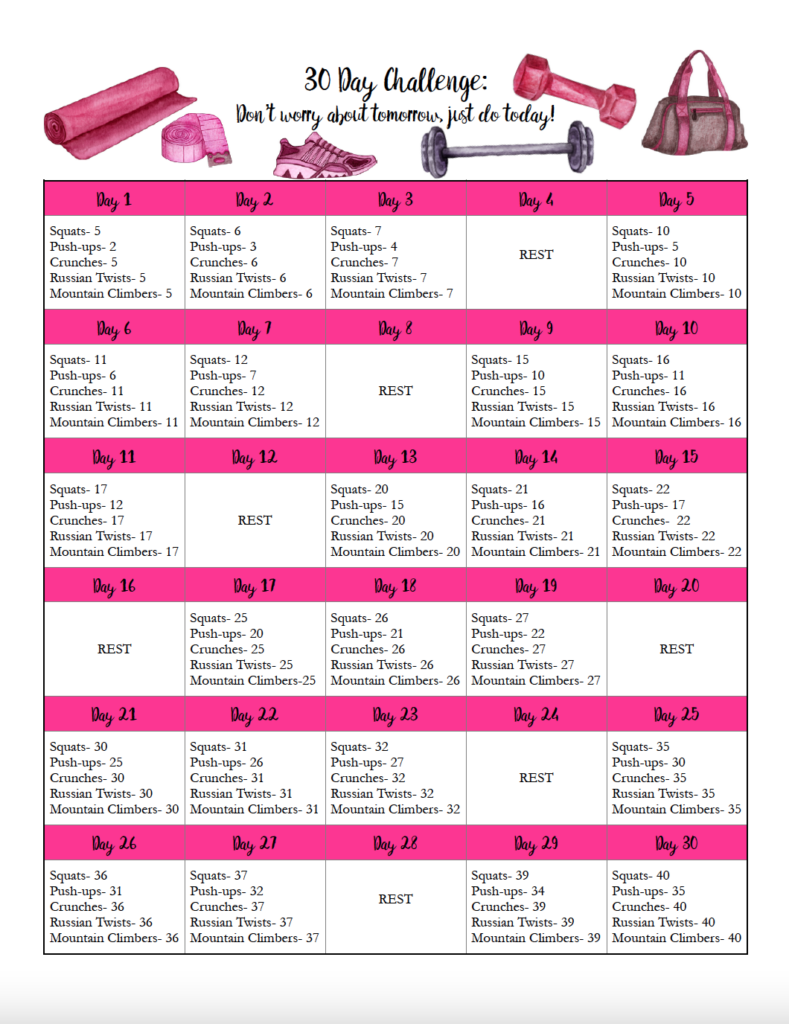
An example of a regimented schedule designed to treat the body as an endless project to be managed. These 30-day calendars are used by influencers as tools to teach young women that achieving the perfect body requires continuous, daily work. This transforms exercise into a strict, exhausting task that drains the joy out of training.
Redrawing the Boundaries
The shift from skinny to strong does not eliminate exclusion; it just redraws the boundaries of perfection. Social media users can combat this by diversifying their feeds, and in so doing changing their search algorithms to prioritize diverse, body-positive content. Because visual images impact our self-esteem much more severely than written text, young women must actively unfollow accounts that post idealized ‘fitspiration’ photos and intentionally fill their feeds with non-appearance-related content to protect their body image (Rodgers et al. 2025). Instead of treating our bodies as endless projects to be managed, young women must translate this awareness into action. We must actively reject “toxic productivity” and redefine what health means by focusing on social connection, functional strength, and the joy of movement rather than pure aesthetics (Kurghan and Thorpe 2025)
References
Camacho-Miñano, Maria J., and Shirley Gray. 2021. “Pedagogies of Perfection in the Postfeminist Digital Age: Young Women’s Negotiations of Health and Fitness on Social Media.” Journal of Gender Studies 30(6):725-736. Retrieved February 18, 2026 (https://doi.org/10.1080/09589236.2021.1937083).
Camacho-Miñano, Maria. J., Sarah MacIsaac, and Emma Rich. 2019. “Postfeminist Biopedagogies of Instagram: Young Women Learning about Bodies, Health and Fitness.” Sport, Education and Society 24(6):651–664. Retrieved February 18, 2026 (https://doi.org/10.1080/13573322.2019.1613975).
Knowlton, Monica, and Brianna L. Newland. 2024. “Beyond the Barbell: Women in Strength-Based Sports and the Reshaping of Gender Norms.” Sex Roles 90(11):1567-1584 Retrieved February 18, 2026 (https://doi.org/10.1007/s11199-024-01521-x).
Kurghan, Francesca, and Holly Thorpe. 2025. “The ‘Glow Up Imperative’: The Fitness Lifestyles of Young Women in Aotearoa New Zealand.” International Review for the Sociology of Sport 60(7). Retrieved February 18, 2026 (https://doi.org/10.1177/10126902251319031).
Perloff, Richard M. 2014. “Social Media Effects on Young Women’s Body Image Concerns: Theoretical Perspectives and an Agenda for Research.” Sex Roles 71(11-12):363–377. Retrieved February 18, 2026 (https://doi.org/10.1007/s11199-014-0384-6).
Rodgers, Rachel F., Susan J. Paxton, and Eleanor H. Wertheim. 2024. Do Images Speak Louder than Words? Effects of Body Positive and Fitspiration Quotes and Images on State Body Image in Women and Men. Sex Roles 91(1):10. Retrieved February 18, 2026 (https://doi.org/10.1007/s11199-024-01553-3).
Rodgers, Rachel F., Amy Slater, Chloe S. Gordon, Siân A. McLean, Hannah K. Jarman, and Susan J. Paxton. 2020. “A Biopsychosocial Model of Social Media Use and Body Image Concerns, Disordered Eating, and Muscle-Building Behaviors among Adolescent Girls and Boys.” Journal of Youth and Adolescence 49(2):399-409. Retrieved February 18, 2026 (https://doi.org/10.1007/s10964-019-01190-0). Salomon, Ilyssa, & Christina S. Brown. 2019. “The Selfie Generation: Examining the Relationship Between Social Media Use and Early Adolescent Body Image.” The Journal of Early Adolescence, 39(4), 539-560. Retrieved February 18, 2026 (https://doi.org/10.1177/027243161877080).
