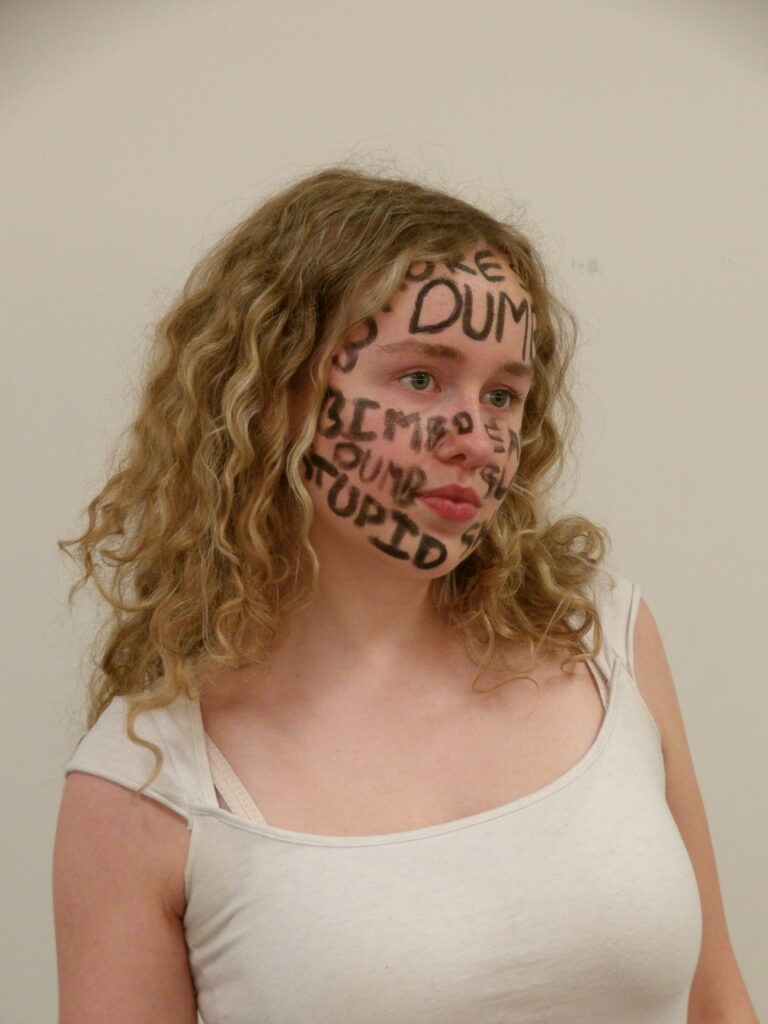
I was first cast as a “dumb blonde” in seventh grade. A few years later, that typecast grew into the kind of character who was still stupid, but also used her desirability to get ahead. This typecast has yet to fully disappear. There have been moments where I have caught myself accepting this stereotype as normal, revealing how deeply these expectations are internalized through repeated exposure.
“Dumb blonde” jokes function as a form of sexist humor that exaggerates stereotypes about women’s intelligence and sexuality (Shifman and Lemish 2010). Even when the joke is framed as being about hair color, the blonde often becomes a stand-in for broader assumptions about femininity. These assumptions shape who is trusted with authority, who is taken seriously, and who is imagined as qualified for leadership (Takeda, Helms, and Romanova 2006). These portrayals persist because they are entertaining, but that familiarity is exactly what makes the stereotype powerful.
Humor and the Normalization of Stereotypes
The “dumb blonde” joke might appear harmless because it is framed as humor. However, humor performs cultural work. When jokes circulate widely enough, they transform stereotypes into common knowledge. Research on sexist humor shows that laughter can signal what is socially acceptable, reinforcing gender inequality even when individuals do not consciously agree with the message (Franks 2015). Even when people laugh to avoid awkwardness, they may still participate in normalizing the stereotype. This connects to what scholars call discursive discipline, which is basically a way that society teaches people how to act through everyday interactions. Instead of strict rules, people learn what’s “normal” or expected because they see the same behaviors repeated over and over again, and they adjust themselves to fit in. (Berbary 2012). In this way, humor does not just reflect social norms, it actively helps produce and maintain them.
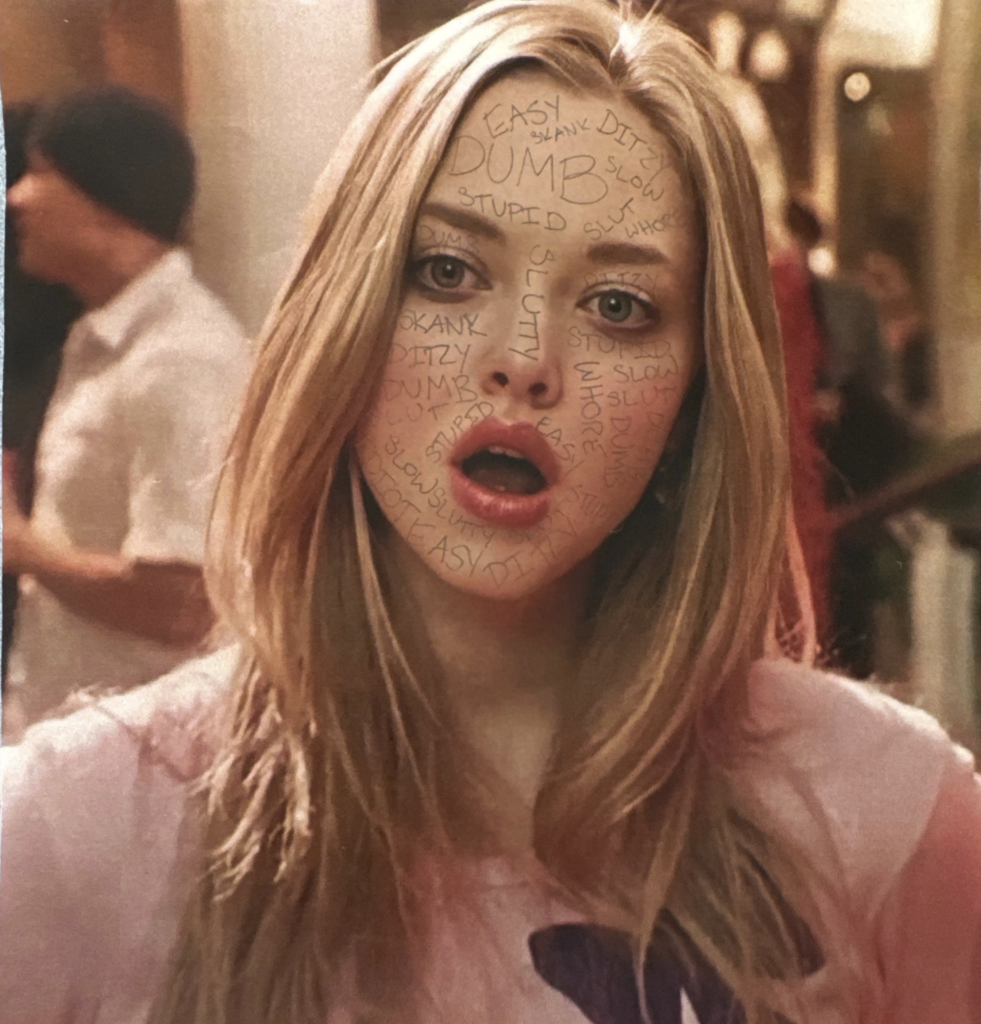
Outside of comedy, I have witnessed this norm reproduced in everyday life. I have heard peers describe blondes as “dumb and easy,” often treating the statement as common knowledge, which is increasingly concerning. This stereotype does not just link intelligence and sexuality; it constructs a version of femininity in which being perceived as unintelligent makes women seem more sexually available and easier to objectify (Franks 2015; Shifman et al. 2010). In addition, through discursive discipline these norms become reinforced within groups of women, as they monitor and correct each other’s behavior, subtly encouraging conformity to sometimes demeaning forms of femininity (Berbary 2012).
The Elle Woods Effect
Linking femininity to both sexualization and diminished credibility has consequences. The “Elle Woods Effect,” describes when hyperfeminine women are dismissed before they have the chance to demonstrate competence (Scott 2023). Because femininity is frequently associated with superficiality, feminine-presenting women are more likely to be perceived as less capable. As a result, hyperfeminine women must often work harder to be taken seriously, constantly negotiating the tension between visibility and credibility. Research on the “beauty premium” helps explain this contradiction, showing that attractive women are often perceived as more likable, but not necessarily more competent (Cheng, Ma, He, Tan, Zhang, & Qiu 2025). This reinforces the idea that appearance can increase visibility while simultaneously undermining authority.
Why This Matters Beyond Comedy
Research on hair-color stereotyping suggests that blondes are often perceived as warmer and more likable, but less competent Being perceived as friendly, but not capable, can influence who is trusted with leadership, who is taken seriously in professional settings, and who is overlooked. (Takeda et al. 2006). These perceptions contribute to broader patterns of gendered inequality by shaping expectations before individuals have the opportunity to prove themselves (Franks 2015). Over time, repeated jokes help shape cultural expectations about intelligence, femininity, and credibility (Shifman et al. 2010).
Challenging this stereotype requires more than simply recognizing it. It means actively questioning why femininity is so easily equated with superficiality and why those assumptions continue to shape opportunities before women even have the chance to define themselves.
Sources
Berbary, Lisbeth A. 2012. “Don’t Be a Whore, That’s Not Ladylike”: Discursive Discipline and Sorority Women’s Gendered Subjectivity. Qualitative Inquiry 18(7):606–25. Retrieved April 13, 2026 (https://doi.org/10.1177/1077800412450150)
Franks, Tara M. 2015. “Hair Raising Humor: A Critical Qualitative Analysis of Humor, Gender, and Hegemony in the Hair Industry.” Order No. 3718244 dissertation, Arizona State University, United States — Arizona (https://www.proquest.com/dissertations-theses/hair-raising-humor-critical-qualitative-analysis/docview/1712399088/se-2).
Kaplan, Anna. 2023. “Amanda Seyfried Loves Her ‘mean Girls’ Character, Karen, as Much as We Do.” TODAY.Com. Retrieved April 16, 2026 (https://www.today.com/popculture/movies/amanda-seyfried-karen-mean-girls-legacy-rcna71934)
Lu Cheng, Qingguo Ma, Yijin He, Yulin Tan, Linanzi Zhang, and Wenwei Qiu. 2025. “Identification Breeds Equity: The Regulation Effect of Group Decision-Making on Beauty Premium.” Humanities & Social Sciences Communications 12(1):644 (https://www.proquest.com/scholarly-journals/identification-breeds-equity-regulation-effect/docview/3203905766/se-2). doi: https://doi.org/10.1057/s41599-025-04957-y.
Scott, J. B. (2023). The Elle Woods effect: Being “girled” while reclaiming girliness. Sexualities, 27(8), 1371-1385. https://doi.org/10.1177/13634607231164714 (Original work published 2024)
Shifman, Limor, and Dafna Lemish. 2010. “Blondejokes.Com: The New Generation.” Society 47(1):19-22 (https://www.proquest.com/scholarly-journals/blondejokes-com-new-generation/docview/2176792852/se-2). doi: https://doi.org/10.1007/s12115-009-9275-9.
Takeda, Margaret B., Marilyn M. Helms and Natalia Romanova. 2006. “Hair Color Stereotyping and CEO Selection in the United Kingdom.” Journal of Human Behavior in the Social Environment 13(3):85-99 (https://www.proquest.com/scholarly-journals/hair-color-stereotyping-ceo-selection-united/docview/61634363/se-2). doi:https://doi.org/10.1300/J137v13n03_06.
Tsintziras, Aya. 2020. “Mean Girls: Every Main Character, Ranked by Intelligence.” ScreenRant. Retrieved April 16, 2026 (https://screenrant.com/mean-girls-every-main-character-ranked-intelligence-smartest/).
