Facing Struggle & Finding Oneself as a Disadvantaged Student at an Elite College
Dedicated to my former gifted teacher, English teacher, and high school counselor Mrs. Harms. Your support and care helped me become someone I am proud to be wherever I am.
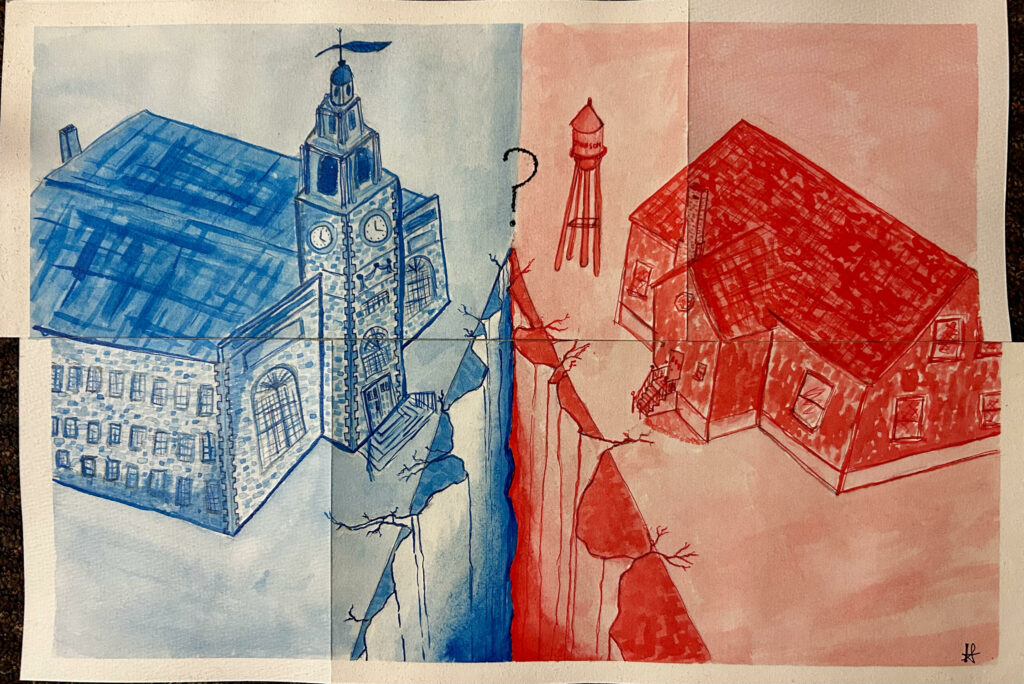
One fateful March evening, after intense preparation, anxiety, and hope, I was accepted to Hamilton College, a prestigious liberal arts college in upstate NY.
I was euphoric, and for good reason. I come from a highly under-resourced school and community in a tiny, humble town in rural Kansas. My high school has no honors or AP classes. Many courses were taught by uncertified teachers. Where I am from, higher education in and of itself is a tall order, and I had just been accepted to one of the best schools in the nation.
Like many disadvantaged yet aspiring students, I applied to college through QuestBridge: an organization that, through partnerships with 55 top US colleges, admits low-income and high-achieving students. Since QuestBridge schools have highly generous financial aid policies, an acceptance through it generally equates a full-ride scholarship. Because of this support, combined with the opportunities for upper mobility coming from an elite collegiate education, acceptances at places like Hamilton College are hailed as life-changing (Gonzalez, 2016:1:37).
“I hate to say it like this, but it was a ticket out of poverty.”
-a questbridge student (Gonzales 2016:1:49)
But in entering these elite spaces, there is a catch. Within institutions not made with disadvantaged students in mind, there are a plethora of social, economic, and institutional stumbling blocks on the journey toward success in elite spaces. Within this struggle, some, like me, might be seized by an unexpected dilemma: how do you reconcile your identity when suddenly placed in a seemingly irreconcilable in-between of the community one came from, and the elite space you are trying their best to find their place in?
Beating the Odds
Underrepresentation of poor, first generation, and otherwise disadvantaged students is a complex and persistent systemic issue within elite institutions like Hamilton. For example, sixteen percent of Hamilton’s class of 2029 is the first in their immediate family to attend college (Hamilton 2025). On the surface, that might seem impressive. However, when you consider that half of all American college students are first-generation, it is clear just how underrepresented first-generation college students are at Hamilton (Jack 2019:4).
Discrepancies in admittance of disadvantaged students at elite colleges like Hamilton start long before the admissions process begins. Because elite admissions prioritize students with the most impressive grades, standardized test scores, course rigor, and extracurriculars, students who are less able to achieve these because of personal disadvantage will stand out less than some of their more advantaged peers (Stevens, 2007:202).
This can play out in a myriad of ways. Disadvantaged students are often at the mercy of whatever public school they live in, regardless of its (often lower) education quality. Low-income students often must work to support their families financially, and commonly lack the time, money, and transportation it takes to well participate in extracurriculars (Jack 2019: 110). Meanwhile, the wealthier students that so often apply to elite schools like Hamilton have better access to higher quality schools, private tutoring, standardized test preparatory, and extracurricular participation (Jack 2019:89).
Disadvantaged students are less likely to apply to elite schools in the first place. Filling out complex college applications is incredibly difficult and time-consuming if you are alone and do not have prior experience. Meanwhile, advantaged students have parents who know the process, and will sometimes hire expert college admissions guides. In order to get accepted to a selective school, it is generally necessary to apply to 10 or more schools (Kirschmann 2019), which can be impossible if you do not have help. Advantaged students are simply more likely to fill out more applications, check more boxes, and thus get accepted in greater numbers (Stevens 2007:71).
Elite college admissions typically pay attention to the best (most wealthy) high schools, and admissions officers often have relationships with the school counselors. Through those relationships, these counselors prepare and expose students to elite schools, where they are regularly accepted (Stevens 2007). Children of alumni are more likely to get accepted. Elite colleges with need-aware policies consider applicants’ ability to afford the school during the admissions process (Iqbal 2024).
Playing the Game
For many disadvantaged students, trying to succeed in a new elite space feels like trying to play a game without knowing the rules. Colleges and universities like Hamilton are demanding in a way many disadvantaged students are unfamiliar with, and so under-resourced students struggle more within elite spaces (Jack 2019:79).
Some of this struggle comes from simple lack of knowledge. How do I fill out this financial aid paperwork? What questions do I ask during academic advising? How do I apply for a campus job? What do I need for my dorm? How do I print? How do I even get to campus? All sorts of seemingly unassuming issues add up. Simple problems become hard, and complex ones become herculean (Osborne 2019:49-50).
Fitting in at elite schools is harder when you lack cultural capital and money. Wealth is visible everywhere, and affluence becomes a norm, sometimes even an expectation. Recently, for example, when classmates in a TA session began talking about their extravagant vacations abroad, I found myself going utterly silent. I felt I had no way to participate in that conversation, I could not connect with them. Even though programs and events exist to help connect disadvantaged students communally, they often feel less socially connected and more lonely than their affluent peers, and siloed in with their other less affluent peers (Osborne 2019:99-101).
Strategies disadvantaged students learned before in their schools and communities often do not work in new elite spaces. Students from underserved backgrounds tend to worry about taking up too much time and resources, fearing it will detriment other students, and avoid what they see as appearing weak. For these reasons, these students are often uncomfortable asking authority figures for help when they need it (Chang and Wang 2020:282). They might instead ask for assistance from peers or family members, asking authorities like professors for help only when their situation gets dire (Jack 2019: 93). Since academically rigorous elite colleges depend on students reaching out to their professors for help, those who do not can fall behind (Jack 2019: 94).
Because disadvantaged students are less likely to form strong bonds with their professors, they are inadvertently cut off from the opportunities that come with connection. These students often feel uncomfortable getting close to professors because they do not want to “suck up” and rather, achieve success because of their hard work, without any help of favoritism (Jack 2019:107-13). However, this sort of “favoritism,” the benefits of having well-connected mentors, is often what gives students the edge in succeeding in elite educational spaces. (Jack 2019:125)
I Belong Here?
It is hard to cope when the world you are trying to belong in does not quite fit, when you are unable to fully buy in to a system you cannot afford, a place you cannot see your whole self in. Sometimes I walk upon this campus and I feel like a ghost of myself, invisible, unable to figure out how I can possibly relate to this place. Other times I feel as if I belong here, but I feel disconnected from my whole self, where I come from and who I am because of it. I want to reap the rewards and learning that this institution offers, and nevertheless I am unsure if I should participate in a game that often feels rigged against me.
Much progress has been made within increasing access for disadvantaged students to elite spaces. Full-need financial aid policies themselves make attendance at top schools possible in the first place. Some elite schools, including Wesleyan University, Carleton College, and Amherst College have stopped considering legacy in admissions (Bryant 2024). Information about how to navigate college admissions is increasingly accessible online. Increased work by opportunity programs, scholarship foundations, and organizations such as QuestBridge help students succeed academically and socially (Osborne 2024:99-100) Nonetheless, substantial barriers persist, and there is much work to be done.
Solving this deep-rooted institutional problem will not be easy- changing an unequal system made by those who directly benefit from it never is- but it is possible. For now, that means better accounting for the barriers that disadvantaged students face within admissions and financial aid. It means increasing social awareness of each other’s different circumstances, treating one another with care and thereby surpassing the need for social capital in finding a sense of belonging.
Though I sometimes might feel invisible, I am not alone. I have a voice and an experience that deserves to be heard. There is power in acknowledgement; being open and honest about problems of inequality- eventually, if those voices are loud enough, those problems will become less ignorable. That means, my fellow peers, whoever you are, wherever you come from, you have more power than you think to make Hamilton a better place for everyone.
References
Bhatia, Aatish, Claire Cain Miller, Josh Katz. 2023. “Study of Elite College Admissions Data Suggests Being Very Rich Is Its Own Qualification.” New York Times (https://www.nytimes.com/interactive/2023/07/24/upshot/ivy-league-elite-college-admissions.html)
Chang, Janet, Shu-Wen Wang. 2020. “The Complexity of Cultural Mismatch in Higher Education: Norms Affecting First-Generation College Students’ Coping and Help-Seeking Behaviors.” Cultural Diversity and Ethnic Minority Psychology 26(3): 280-294.
Chetty, Raj, David J. Deming, John N. Friedman. 2023.“Diversifying Society’s Leaders? The Determinants and Causal Effects of Admission to Highly Selective Private Colleges.” The Quarterly Journal of Economics 141(1): 51-145.
Debraggio, Mike. 2010. “Hamilton Adopts a Need-Blind Policy for Admission.” Hamilton College. Retrieved May 5, 2006 (https://www.hamilton.edu/news/story/hamilton-adopts-a-need-blind-policy-for-admission).
Gonzales, Bettina. 2016. (Un)Privileged: The Cost of Being Poor at An Elite Institution. You-Tube Web site. Retrieved May 5, 2026 (https://youtu.be/qZUsjhlRFnw?si=uDC_nZUgJE_NaPKb).
Hamilton College Admissions. 2025. “Class of 2029 Profile.” Hamilton College. Retrieved May 5, 2006 (https://www.hamilton.edu/admission/apply/class-profile).
Jack, Anthony A. 2019. The Privileged Poor: How Elite Colleges Are Failing Disadvantaged Students. Harvard University Press.
Kirschmann, Robert. 2019. “How Many Colleges Should I Apply to? Here’s the Answer.” Columbia College Consulting (https://www.columbiacollegeconsulting.com/blog/howmanycollegestoapplyto).
Osborne, Melissa. 2019. “How First-Generation College Students Navigate Social Mobility.” PhD dissertation, Department of Sociology, University of Chicago, Chicago, IL. Retrieved from ProQuest Dissertations & Theses.
Stevens, Mitchell L. 2007. Creating a Class: College Admissions and the Education of Elites. Harvard University Press.
