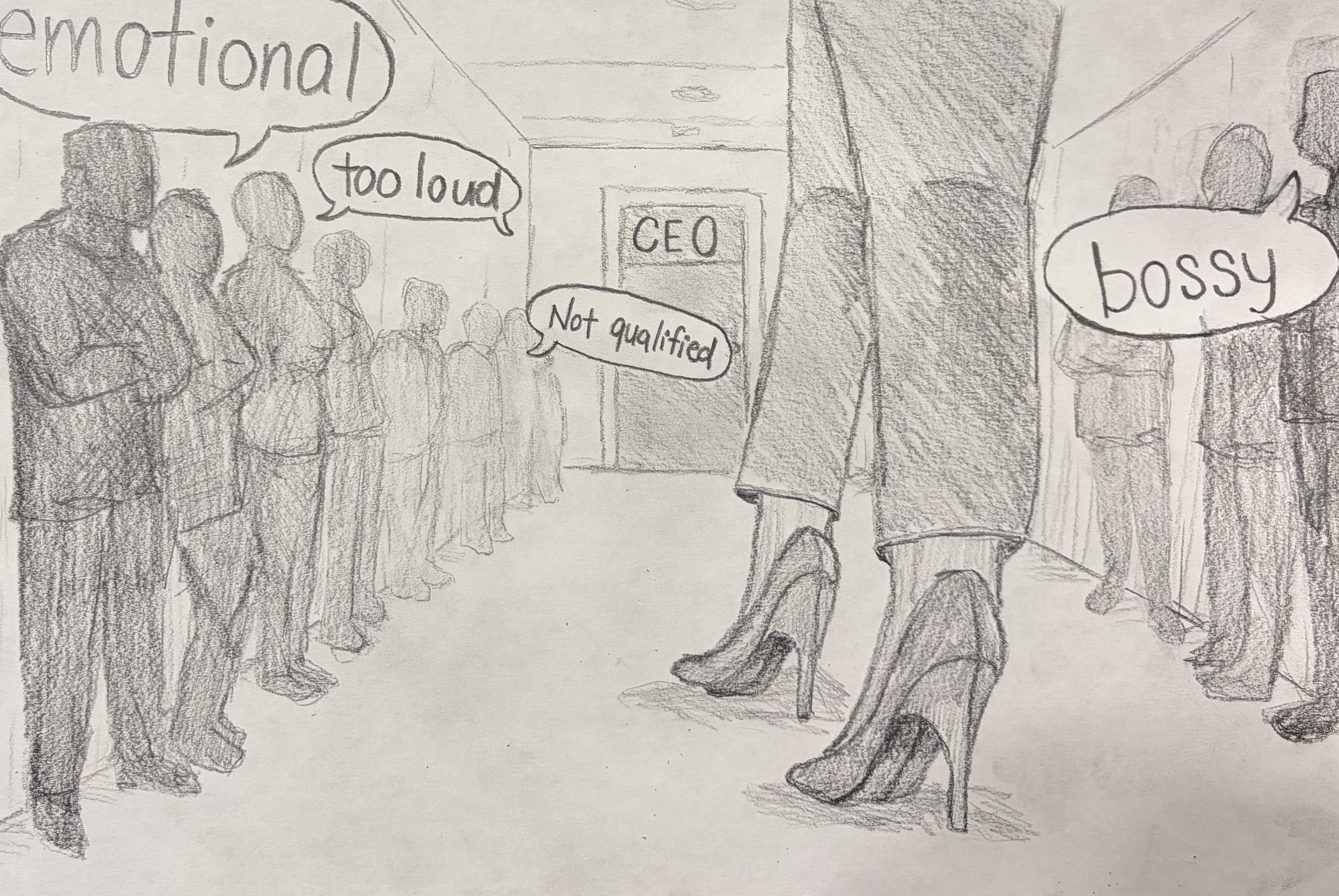
Leadership is about hard work. Put in the hours. Make sacrifices. Stay committed. The best will rise. That’s the story. But if leadership were truly based on merit alone, executive offices would look very different.
Women have surpassed men in college enrollment and degree attainment and make up a large portion of the professional workforce (Buchmann and DePrete 2006). And yet, they remain underrepresented in senior executive and top leadership roles across industries (Scott and Brown 2006). If women are equally qualified and equally present, why are they still not equally represented at the top?
Is the answer blatant sexism? Or is it instead something quieter: invisible organizational barriers that shape who is seen as legitimate, committed, and “leadership material.”
The Myth of Neutral Organizations
Many organizations truely believe they are gender-neutral and claim to promote based on merit. However, research suggests that supposedly neutral organizations often have certain gendered expectations (Duffy, Jolliffe, and Collins 2024). In high status, professional roles, the ideal worker is expected to be constantly available, prioritize work above all else and be willing to relocate, travel, and sacrifice personal time without hesitation.
These expectations are not explicitly about gender. But they exist within a society where women still disproportionately carry domestic responsibilities (Cerrato and Cifre 2018). When leadership is defined by extreme commitment to work, it inadvertently helps those who are free to meet those demands (Duffy et al. 2024).
Some organizations have begun to challenge these norms through flexible work options and expanded parental leave. For example, companies like Johnson & Johnson have introduced more inclusive policies, like flexible work schedules and long paid paternity leave, suggesting that commitment does not have to look the same for everyone. Research on flexible parental leave also shows that when men are encouraged to take on more caregiving roles, expectations around availability and commitment can begin to shift (Brandth 2016).
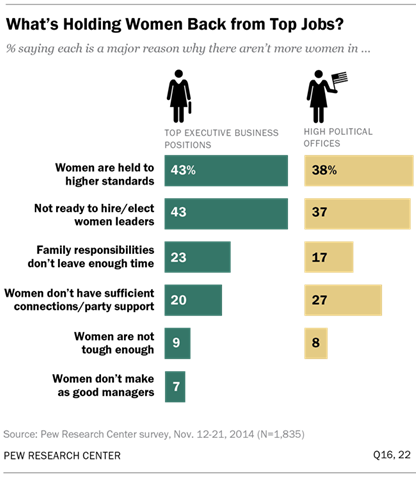
Leadership gaps are not simply about confidence or desire; they are shaped by organizational norms and promotion systems. Institutions determine who is seen as trustworthy, competent, and a “good fit” (Cook and Glass 2014). If leadership has historically been male-dominated, then traits like assertiveness or constant availability may be unconsciously coded as masculine. Women who do not match these expectations may be overlooked, while those who do may face backlash for violating gender norms (Cook and Glass 2014).
When inequality is embedded in expectations about “fit” or “commitment,” it becomes harder to identify. Women who struggle to advance may think these obstacles are personal shortcomings. Maybe they were not assertive enough. Maybe they simply did not want it badly enough. Research supports this internalization, showing that when structural barriers are invisible, individuals are more likely to attribute outcomes to personal failure rather than systemic inequality (Duffy et al. 2024).
Access and Networks
Another key barrier is access to mentorship. Advancement often depends on sponsorship, visibility, and inclusion in influential networks. In many workplaces these networks are built through informal and sometimes male-dominated relationships. These might develop through bonding after work, shared social spaces, or longstanding connections. When women are excluded from or less present in these spaces and networks, they may miss out on the kind of advocacy and insider support that helps turn opportunities into actual promotions (Meng et al. 2023)
Even when women reach leadership roles, they are sometimes appointed during periods of instability, a dynamic often referred to as the “glass cliff” (Cook et al. 2014). In these cases, women are placed into roles where failure is more likely, reinforcing stereotypes rather than dismantling them.
Learning from Recent Progress
It is important to acknowledge that progress has occurred. Many organizations have implemented diversity initiatives, leadership development programs, and mentorship pipelines aimed at supporting women. These efforts matter. For example, structured mentorship programs and formal sponsorship initiatives have been shown to increase women’s access to leadership opportunities and improve promotion rates (Meng and Neill 2023). Some companies have also seen success with transparent promotion criteria and flexible work policies, which help reduce bias in evaluating commitment and performance. However, if the underlying definition of leadership continues to revolve around extreme availability and personal sacrifice, then inequality can persist even within organizations that see themselves as progressive (Duffy et al. 2024).
Making invisible barriers visible does not mean denying women’s agency or progress. It means recognizing that fairness requires more than neutral language.
References
Brandth, Berit., and Elin Kvande. 2016. “Fathers and flexible parental leave.” Work, Employment and Society, 30(2), 275-290. (https://doi.org/10.1177/0950017015590749)
Buchmann, Claudia, and Thomas A. DiPrete. 2006. “The Growing Female Advantage in College Completion: The Role of Family Background and Academic Achievement.” American Sociological Review, 71(4), 515-541. (https://doi.org/10.1177/000312240607100401)
Cerrato, Javier and Eva Cifre. 2018. “Gender Inequality in Household Chores and Work-Family Conflict.” Front. Psychol. 9:1330. (https://doi.org/10.3389/fpsyg.2018.01330)
Cook, Alison and Christy Glass. 2014. “Women and Top Leadership Positions: Towards an Institutional Analysis.” Gender, Work & Organization, 21(1), 91–103. (https://doi.org/10.1111/gwao.12018)
Duffy, Cherie, Patricia Jolliffe and Helen Collins. 2024. “‘It’s Down to Hard Work, Lonely Work, Long, Long Hours, and You have to be Able to Sacrifice’: Removing the Veil of the Gender-Neutral Organisation.” Gender Issues 41(4):21. (https://doi.org/10.1007/s12147-024-09337-5.)
Meng, Juan, and Marlene S. Neill. 2023. “Diversifying Gender Equity in Leadership in Public Relations: The Role of Mentoring and Instrumental Support at the Organizational Level.” Corporate Communications 28(1):155-168.(https://doi.org/10.1108/CCIJ-06-2022-0066.)
Scott, Kristyn A., and Douglas J. Brown. 2006. “Female First, Leader Second? Gender Bias in the Encoding of Leadership Behavior.” Organizational Behavior and Human Decision Processes 101(2):230–42. (https://doi.org/10.1016/j.obhdp.2006.06.002)
“Women and Leadership.” 2015. Pew Research Center. (https://www.pewresearch.org/social-trends/2015/01/14/women-and-leadership/)
