Fast fashion has become a staple in many wardrobes. Fast fashion brands such as Zara, H&M, and SHEIN, that produce inexpensive clothing rapidly in response to the latest trends, have recently gained popularity (Hageman et al. 2023). Despite fast fashion’s accessibility and convenience, brands often use unethical labor practices. They pay workers low wages to work long hours in dangerous conditions, and some even use child labor to produce large amounts of products in a short time (Jackson 2022).
Human Rights Concerns
Businesses that produce fast fashion often use unethical production practices. Brands prioritize profits over workers’ well-being. To maximize profits, many companies reduce costs on labor. Companies outsource production to developing countries and regions where employees work long hours with little pay in harsh conditions, and where child labor is utilized (Chong 2024). SHEIN workers in China, for example, often work 75-hour work weeks and earn only about two cents per item (Jackson 2022). Low government authority or weak enforcement of labor laws allows for the unethical standards that garment workers must endure (Chong 2024).
Shifting Blame from Women to Producers
Fast fashion companies center women in their advertising of trendy women’s clothing, and cater primarily to women who tend to purchase more clothing compared to men (Bick and Ekenga 2018 and Horton 2018). In response, some critics blame women for the rise of fast fashion’s unethical labor practices.
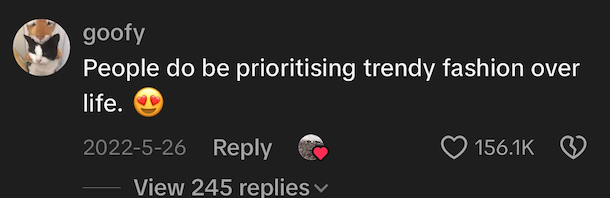

Online comments blame women for their shopping habits and excessive shopping. Although women contribute to the demand for fast fashion brands, issues such as affordability, accessibility, and knowledge of labor conditions are often overlooked (Hageman et al. 2023; Bick et al. 2018).
Yet producers are the ones most deserving of the blame. Producers control marketing and labor conditions, so ultimately they are the only ones who can reform their business models and switch to more ethical and sustainable labor conditions. Fast fashion brands’ producers also avoid public scrutiny and criticism through their lack of transparency (Chong 2024).
Solutions
Consumers can begin to pressure clothing manufacturers by boycotting fast fashion and encouraging reusability and buying second-hand clothes. In addition, movements need to put pressure on producers by organizing collective boycotts and protests against the governments that allow these labor abuses to occur. Active citizens should pressure them to increase regulations on labor conditions. Groups like Clean Clothes Campaign and Labour Behind the Label, for example, organize protests pressuring corporations and governments, and spread awareness of these poor working conditions to seek justice for garment workers.
References
Bick, Rachel, Erika Halsey, and Christine C. Ekenga. 2018. “The Global Environmental Injustice of Fast Fashion.” Environmental Health 17(1).
Chong, Jia Hui and Changsong Wang. 2024. “Optimising Corporate Social Responsibility Communication in Asia: A Comparative Case Study of Uniqlo and Shein.” Social Responsibility Journal 20(8):1558–75.
Gupta, Shipra and James W. Gentry. 2015. “Construction of Gender Roles in Perceived Scarce Environments – Maintaining Masculinity When Shopping for Fast Fashion Apparel.” Journal of Consumer Behaviour 15(3):251–60.
Hageman, Eva, Vikas Kumar, Linh Duong, Archana Kumari, and Eileen McAuliffe. 2023. “Do Fast Fashion Sustainable Business Strategies Influence Attitude, Awareness and Behaviours of Female Consumers?” Business Strategy and the Environment 33(2):1081–98.
Horton, Kathleen. 2018. “Just Use What You Have: Ethical Fashion Discourse and the Feminisation of Responsibility.” Australian Feminist Studies 33(98):515–29.
Jackson, Sarah. 2022. “China: Shein Factory Employees Work 18 Hours a Day with No Weekends Earning Just Two Cents per Item, Report Finds.” Business and Human Rights Centre. Retrieved April 1, 2026 (https://www.business-humanrights.org/en/latest-news/china-shein-factory-employees-work-18-hour-shifts-with-no-weekends-earning-just-two-cents-per-item-report-finds/).
M. Taplin, Ian. 2014. “Who Is to Blame?: A re-examination of fast fashion after the 2013 factory disaster in Bangladesh” Critical Perspectives on International Business 10(1/2):72–83.
Videos Used
https://www.youtube.com/watch?v=Pw3h5wQRoPc&t=114s
https://www.youtube.com/watch?v=kQzBjvqLZFo
https://www.youtube.com/watch?v=1BdY1wssh3U
Inspiration
I was inspired by Graham Nielsen’s sociology art piece from spring 2020. I was inspired by how he used a video by H&M and showed the reality of what is put into producing the clothes shown in the video. I used a video by SHEIN similarly to the video he used by H&M and showed the unethical labor used to create the video while he used his video to highlight the overall issues with the fast fashion industry. I took inspiration from his editing style but tried to keep my own original style.
